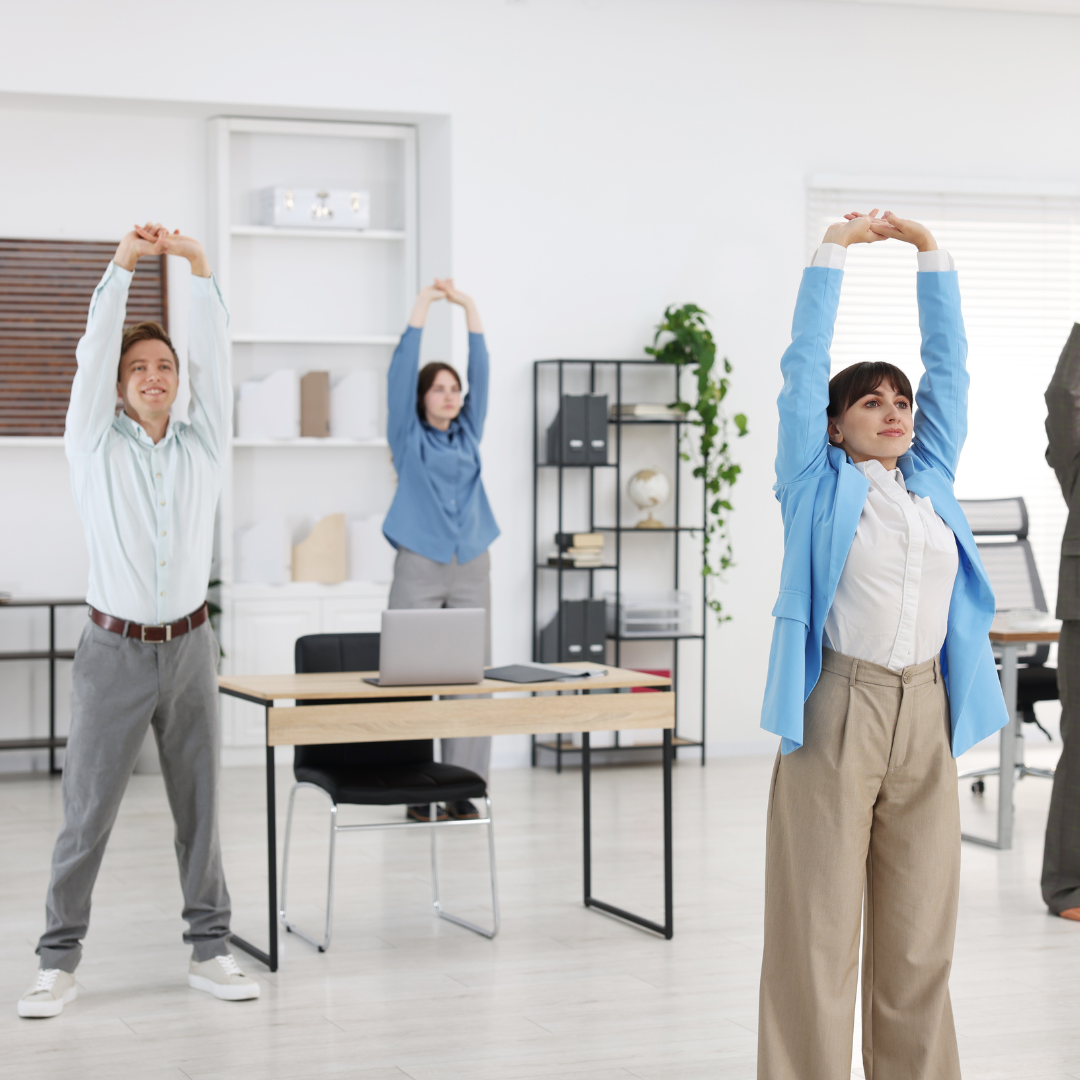
Short Exercise Breaks at Work: Boosting Movement Without Disrupting Productivity
Modern work environments often require employees to spend several hours sitting at a desk, attending meetings, answering emails and working on computers. While this way of working is often necessary, spending long periods without moving can leave employees feeling tired, stiff and less energized throughout the day.
One practical solution is to introduce short exercise and movement sessions during work breaks. These sessions do not need to last an hour or require employees to change into sports clothes. Even a few minutes of movement can give employees an opportunity to step away from their screens, activate their bodies and return to work feeling refreshed.
For companies developing a modern employee wellness strategy, short exercise breaks can become a simple and accessible way to encourage healthier working habits without significantly disrupting the working day.
Why Are Short Exercise Breaks Important?
The traditional approach to workplace fitness often involves gym memberships, weekly fitness classes or longer sports sessions outside working hours. While these initiatives can be valuable, they are not necessarily accessible or convenient for every employee.
Employees have different schedules, responsibilities, fitness levels and personal preferences. Some may not have enough time to attend a one-hour fitness class during the working day, while others may simply prefer shorter activities that can easily fit around their responsibilities.
Short movement sessions offer another approach by bringing physical activity directly into the working routine. Instead of asking employees to find an additional hour for exercise, companies can encourage them to incorporate small periods of movement throughout the day.
A few minutes of stretching between meetings, a short mobility session during lunch, a brief desk workout in the afternoon or a quick walking break can all provide employees with opportunities to move. The objective is not necessarily to replace traditional exercise, but rather to make movement easier to integrate into everyday working life.
What Is a Micro-Workout?
A micro-workout is a short period of physical activity that can last anywhere from a few minutes to around fifteen minutes. The concept is simple. Rather than concentrating all physical activity into one long workout, employees can incorporate smaller periods of movement throughout the day.
For example, an employee might start the morning with five minutes of mobility exercises, take ten minutes to walk or stretch during lunch and finish the afternoon with another five minutes of posture and desk exercises.
These short sessions create additional opportunities for physical activity without requiring employees to make significant changes to their schedules.
Micro-workouts can also be adapted to different environments. They can take place at a desk, in a meeting room, at home, outdoors or through a digital wellness platform. This flexibility makes them particularly relevant for modern companies with office-based, hybrid and remote employees.
How Can Companies Integrate Short Exercise Sessions Into the Workday?
The key to introducing short exercise sessions successfully is to make movement simple, voluntary, accessible and easy to organize.
Companies can begin by encouraging employees to take short movement breaks during appropriate moments in the working day. A five-minute session could involve gentle shoulder and neck mobility, stretching, simple bodyweight movements, breathing exercises or other low-impact activities.
The objective is not to create an intense workout. Instead, the focus should be on encouraging employees to move regularly rather than remaining inactive for several consecutive hours.
Another effective opportunity is to introduce movement between meetings. Employees who have back-to-back meetings often find it difficult to dedicate time to exercise. However, even a few minutes between two meetings can provide an opportunity to stand up, stretch, walk around or perform a few simple mobility exercises.
This approach can be particularly useful for employees working remotely, where long periods of screen time can easily become part of the daily routine.
Companies can also introduce a simple concept such as a "Movement Minute." At certain times during the day, employees can receive a reminder encouraging them to stand up, move their shoulders, walk around, stretch or simply change position. Although these activities are very short, they can help create a culture where movement becomes a normal part of the working day.
For organizations looking for a more structured approach, ten- to fifteen-minute group sessions can also be introduced during appropriate breaks. A coach could lead a short desk mobility session, a stretching and relaxation session, a light energy-boosting workout or a workplace yoga session.
These sessions can be delivered on-site, virtually or through a digital wellness platform, allowing companies to adapt the format to their workforce.
Making Short Exercise Sessions Accessible to Everyone
One of the most important considerations when introducing workplace fitness is inclusivity. Not every employee has the same fitness level, physical ability, experience or interest in exercise.
For this reason, workplace movement sessions should focus on accessibility rather than athletic performance. Employees should be able to participate comfortably regardless of their fitness level.
Offering different types of activities can help employees find something that suits them. Some may prefer stretching and mobility, while others may enjoy yoga, walking, low-impact workouts, posture exercises or short strength sessions.
The objective should be to provide employees with choices rather than imposing one specific type of exercise.
This approach can also help companies create a wellness culture that is more inclusive. Workplace wellbeing should not be perceived as something only for employees who are already physically active. It should provide opportunities for everyone to take small steps towards a healthier routine.
The Role of Managers in Encouraging Movement
Managers can play an important role in creating a workplace culture where taking short movement breaks is accepted and encouraged.
When managers participate in movement sessions themselves, employees may feel more comfortable doing the same. A manager who suggests taking five minutes to stretch before the next meeting can demonstrate that movement is compatible with professional responsibilities.
This is particularly important in workplaces where employees may feel that taking a break is a sign of reduced productivity.
The message should instead be that short breaks can be part of a healthy and sustainable working routine. At the same time, participation should remain voluntary. Employees should never feel pressured to exercise or disclose personal health or fitness information.
Using Technology to Make Movement Easier
Technology can make short exercise sessions even easier to integrate into the working day.
Instead of requiring employees to attend a specific class at a specific location and time, digital wellness platforms can provide access to short, on-demand sessions that employees can use when it is convenient for them.
An employee who has only ten minutes available could select a short mobility or stretching session. Another employee with more time could choose a longer workout.
This creates a more personalized wellness experience and gives employees greater control over how they participate.
Digital platforms can also help companies provide consistent access to wellness content for employees working across different offices, cities or countries. This can be particularly valuable for organizations with hybrid and international teams.
Short Exercise Sessions and Employee Engagement
One of the challenges of corporate wellness programs is maintaining employee engagement over time. A wellness initiative may generate significant interest when it launches, but participation can decline if employees find the program difficult to use or difficult to integrate into their daily routines.
Short sessions can help reduce this barrier.
Instead of asking, "When can I find one hour to exercise?", employees can start thinking, "I have ten minutes. What can I do?"
This small change can make physical activity feel more achievable.
Companies can also create simple movement initiatives that encourage employees to participate consistently. For example, an organization could introduce a five-day movement campaign where employees are encouraged to complete one short activity each working day.
Another approach could be a ten-minute daily movement initiative, encouraging employees to find at least ten minutes during the working day to move.
The purpose of these initiatives should not be to create pressure or competition. Instead, they can help employees develop simple habits and create a sense of collective participation around wellbeing.
Creating a Culture of Movement
The most effective workplace wellness initiatives are not necessarily those with the largest number of activities. They are often the initiatives that employees can realistically incorporate into their everyday lives.
A culture of movement can be created through small changes. Employees can stand during a phone call, walk during a break, stretch between meetings or take a short mobility session when they have a few minutes available.
Colleagues can also choose to walk together when having informal conversations rather than always remaining at their desks.
Individually, these actions may seem small. However, when they become part of a company's everyday culture, they can help create an environment where physical activity is seen as a normal part of the employee experience.
This is particularly relevant as the modern workplace continues to evolve. With more employees spending significant amounts of time working from computers, companies have an opportunity to rethink how movement can be integrated into the working day.
How HR Teams Can Introduce Short Exercise Breaks
For HR and wellbeing teams, introducing a workplace movement initiative does not necessarily require a complex program.
A company can begin by understanding what employees actually want. Asking employees when they would prefer to participate, what types of activities interest them and whether they prefer online or in-person sessions can provide valuable insights.
Starting with a small pilot can also be an effective approach. Rather than immediately launching a large-scale program, a company could introduce two short sessions per week for a month and then collect employee feedback.
This allows HR teams to understand participation levels, identify popular activities and determine what works best for their workforce.
Communication is also important. Employees should understand that the objective of the program is to support their wellbeing rather than evaluate their fitness. The message can be simple: take a few minutes to move, recharge and return to your day.
Over time, HR teams can monitor participation and employee feedback to understand whether the initiative is creating engagement. This information can then be used to adapt the program and make it more relevant to employees.
The Role of Employers in Workplace Wellbeing
Employers cannot and should not control how employees exercise. However, they can create an environment where healthier choices are easier to make.
Providing access to short, flexible and inclusive physical activity opportunities is one way companies can support employee wellbeing.
For organizations with hybrid or remote teams, digital wellness platforms can provide access to movement sessions regardless of where employees work. For office-based organizations, short on-site sessions can complement digital programs and create opportunities for employees to participate together.
Combining digital access, professional coaching and workplace activities can therefore create a more comprehensive approach to employee wellbeing.
The goal is not to turn the workplace into a gym. The goal is to create an environment where employees have more opportunities to move, recharge and take care of their wellbeing during the working day.
Conclusion
Employees do not always need an hour at the gym to introduce more movement into their working day. Sometimes, five, ten or fifteen minutes can be enough to create an opportunity to move and reset.
Short exercise breaks can be integrated between meetings, during lunch, in the afternoon or at other appropriate moments throughout the working day. When these opportunities are easy to access and adapted to different employee needs, they can become a natural part of the workplace experience.
For HR and wellbeing teams, the focus should be on making movement accessible, flexible, inclusive and easy to adopt.
In the modern workplace, employee wellbeing does not necessarily require more time. Sometimes, it simply requires companies and employees to make better use of the time they already have.